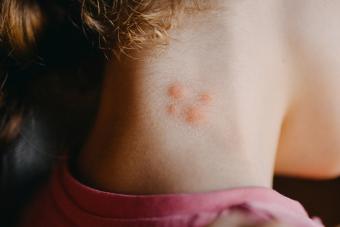
Roseola is a common viral infection that usually affects young children. It causes a pinkish, non-itchy rash.
The Infection and the Rash
Fever
Roseola is usually a mild infection. It occurs most often in children younger than four. It begins with a high fever, which comes on suddenly. The Baby Center says that some children will also have a sore throat, runny nose, or other non-specific symptoms that resemble a cold. Dr. Sears of Dr.Sears.com says, "Roseola is about the only virus in which the rash appears after the fever breaks."
Rash
After the fever, many (but not all) children develop a skin rash. the rash usually goes away within two days. Characteristics include:
- The rash covers the entire body.
- It may be faint or more prominent.
- It often looks like small, pink spots, which can be flat or raised.
- It can also be a combination of flat and raised spots which lose color when pressed.
- Spots may have a lighter "halo" around them.
- The rash doesn't hurt or itch.
In addition to the rash, children may have swollen lymph nodes, also called swollen glands, at the back of the head where it meets the neck.
Some children also have a different kind of rash inside their mouths. Around the fourth day after the fever begins, some children will have small, reddish bumps that appear on the soft palate (the inner part of the "roof of the mouth") and on the uvula. These will go away on their own.
Seizures
According to KidsHealth.org, rapid, high fevers can cause febrile seizures in small children. This site says that between 10 and 15 percent of roseola patients will have a seizure. If this happens, it's important to seek medical attention immediately. A doctor can help bring the fever down and make sure that the seizure did not have a more serious cause.
The Cause
This infection is caused by a type of herpes virus called Human Herpes Virus 6 (HHV-6). This is not the same type that causes genital herpes or cold sores.
The virus is transmitted in fluids from the nose and mouth. A child can spread the virus by coughing, sneezing, or even just playing near another child. Since small children often put their hands -and everything else!- in their mouths, the virus can spread quickly in daycare centers and other places children spend time together.
It's possible to spread the virus even before the disease has appeared. That's probably why this infection is so common: by the time a parent realizes that a child has it, he/she has already given the virus to others.
Who Gets It
Medical tests suggest that, in the United States, nearly everyone is been exposed to HHV-6 at some point. More than three quarters of people have antibodies to the virus by age 2.
This common disease usually appears in children under four. The most common age is between nine and twenty-one months, but younger babies and older children can get it too. It's rare for a person to have roseola more than once.
In adults, new HHV-6 infection is uncommon. The virus can remain in the body after the initial infection, but in healthy people it almost never causes any problems. Very rarely, it can re-activate, causing an illness with swollen lymph nodes, liver inflammation, and symptoms that resemble mononucleosis. In people with damaged immune systems, such as transplant recipients or cancer patients, HHV-6 reactivation happens more often and can cause a more serious illness.
Treatment
Home Treatment
There is no specific treatment for this infection. Almost all children will get better in about a week without any medicine. As with most childhood illnesses, rest, fluids, and healthy foods are all appropriate ways to help the child feel better. Over the counter medicines formulated especially for children can bring down the fever. (Never give aspirin to a child; your pediatrician can recommend age-appropriate choices.) In most cases, even children who have had fever-related seizures will not need any extra treatment.
When to Call the Doctor
The accompanying fever can be very high. Many doctors will want parents to call them for fevers over 103 that don't get better with over-the-counter treatment; ask your doctor for his/her recommendation. According to Dr. Risley's website, an oral temperature of 105 degrees or above can be dangerous. Many doctors will recommend giving age-appropriate, fever-reducing medicine and then going straight to the emergency room. (For babies under three months, any fever at all is reason to call the doctor.)
A very few children do develop more serious cases of roseola. Always seek medical treatment for a child who is:
- Not eating or drinking
- Appears listless
- Cries uncontrollably
- Or otherwise seems to be very ill
When It Is Serious
Although infections like this one are common in childhood, they should be taken seriously. In some cases, the child may need hospital care to prevent serious dehydration or to treat complications. If your child's playmates develop this infection, limit your child's exposure by removing him from social interaction for at least a week. Be cautious but don't panic if your little one is diagnosed with roseola.